
The Fastest Man-Made Object Ever: The Story of the Nuclear Manhole Cover
We spend billions building aerodynamic rockets to reach the stars. Turns out, all we really needed was a nuclear bomb and a loose lid.

If you ask a physicist what the fastest man-made object in history is, they will usually point to the Parker Solar Probe, a NASA spacecraft that is currently screaming around the sun at 400,000 mph.
But there is a legend in the physics community, backed up by declassified reports, that the title actually belongs to a 900kg steel plate from 1957.
Before NASA existed, before Sputnik launched, and before we had calculated the trajectories for Apollo, a team of scientists in the Nevada desert may have accidentally beaten everyone to space using nothing but brute force and bad welding.
Operation Plumbbob
The year was 1957. The Cold War was freezing, and the US was detonating nukes in the Nevada desert like they were firecrackers.
This specific series of tests was called Operation Plumbbob. A scientist named Dr. Robert Brownlee was tasked with designing a containment test called “Pascal-B.”
The goal wasn’t to see if the bomb worked. They wanted to see if they could contain the fallout of an underground explosion. They drilled a shaft 500 feet (150 meters) straight down into the earth, placed a nuclear device at the bottom, and sealed the opening.
The 900kg Cork
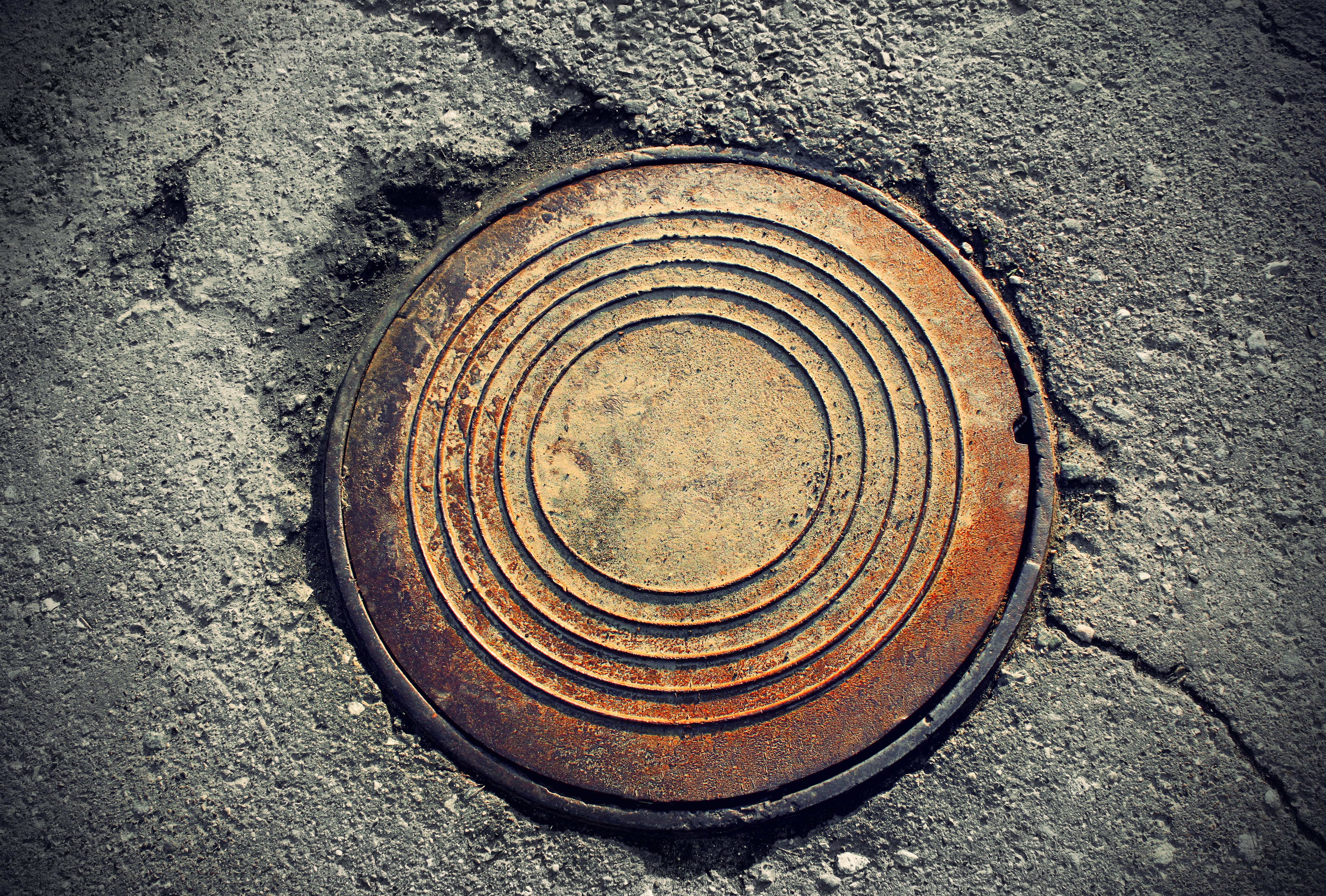
To cap the shaft, they welded a massive steel plate over the opening. It was 4 inches thick and weighed roughly 900kg (2,000 lbs). It looked like a giant, industrial manhole cover.
The plan was simple: The nuke goes off, the concrete plug at the bottom absorbs the shock, and the steel plate stays put.
That is not what happened.
When the bomb detonated, it didn’t just explode; it created a pressurised column of nuclear fire in the shaft. The shaft essentially turned into the world’s largest gun barrel. And the steel plate was the bullet.
The One-Frame Phantom
Brownlee had set up high-speed cameras to record the event, expecting to see the plate bulge or maybe pop off.
When they developed the film, the plate was gone. They checked the first frame: The plate was sitting on the hole. They checked the second frame: The plate was gone.
It had moved from “stationary” to “out of the frame” in a single exposure interval (roughly one millisecond).
Brownlee did the math. Based on the height of the camera’s view and the frame rate, he calculated that the plate was moving at approximately 130,000 miles per hour (approx. 60 kilometers per second).
For context: Escape Velocity (the speed needed to leave Earth’s gravity) is only 25,000 mph. This sewer lid was moving five to six times faster than it needed to leave the planet forever.
Did It Beat Sputnik?
This happened in August 1957. Sputnik 1 (the first official satellite) didn’t launch until October 1957.
If the plate survived its journey through the atmosphere, it technically became the first man-made object to reach space, beating the Soviet Union by two months.
However, physics is a cruel mistress. Moving at 130,000 mph through the thick lower atmosphere creates enormous friction. Most scientists believe the plate didn’t survive as a solid object. The compression heat would have been so intense that the steel likely turned into a “gas bullet”, vaporising instantly but keeping its momentum, shooting into space as a cloud of metallic plasma.
But Brownlee himself wasn’t so sure. When asked years later what happened to the plate, he famously replied: “I don’t know. We never found it.”
The Accidental Space Program
This story highlights the beautiful absurdity of early atomic science. We spent decades refining liquid rocket fuel, calculating orbital mechanics, and training astronauts to gently pierce the atmosphere.
Meanwhile, Dr. Brownlee proved that you can achieve the same result by simply digging a hole, dropping a nuke into it, and putting a lid on top. It is the “Looney Tunes” approach to astrophysics. If the plate did survive, it is currently traveling through the solar system, a silent, rotating disk of American steel, serving as a confusing monument to the time we tried to nuke the ground and missed.
TL;DR
During a 1957 underground nuclear test (Operation Plumbbob), US scientists accidentally launched a 900kg steel plate into the atmosphere. The explosion turned the test shaft into a cannon, blasting the “manhole cover” into the sky at an estimated 130,000 mph. This is six times the speed required to escape Earth’s gravity. While it likely vaporised due to air friction, if it survived, it would be the first man-made object in space (beating Sputnik by months) and the fastest object ever launched by humans.
Further Reading
Nuclear Weapon Archive — “Operation Plumbbob.” The technical breakdown of the Pascal-B test and the “thunder well.”
🔗 https://nuclearweaponarchive.org/Usa/Tests/Plumbbob.htmlThe Register — “The man who accidentally launched a manhole cover into space.” An interview with Dr. Robert Brownlee about his calculations.
🔗 https://www.theregister.com/2015/07/16/america_manhole_cover_space/
Closing Thought
The next time you see a manhole cover on the street, show some respect. With the right amount of motivation (and high explosives), that rusty disc could be an astronaut.
Use that fact responsibly.